The fibre label tells you what a lingerie fabric is made from, while the fabric construction tells you how it will feel and behave. Cotton and modal are fibres. Lace, satin, mesh and microfibre describe constructions or fabric families that can be made from different fibres. Read both the composition and the care label before deciding.
Cotton
Cotton is a natural cellulose fibre valued for softness and absorbency. It is a comfortable choice for everyday briefs, soft bras and sleepwear. Cotton itself has limited stretch, so close-fitting lingerie is often blended with elastane.
Absorbency can feel comfortable, but cotton may hold moisture longer than some synthetics. Fabric weight, knit and finishing matter as much as the fibre name.
Modal and lyocell
Modal and lyocell are regenerated cellulosic fibres made from wood-derived cellulose. They are often used in soft, fluid underwear, slips and loungewear. TENCEL, a branded fibre producer, describes its modal and lyocell fibres as smooth with moisture-control properties. Performance still depends on the finished fabric and blend.
Silk and satin
Silk is a protein fibre with natural lustre, drape and a light feel. Satin is a weave that creates a smooth, glossy face. Satin can be woven from silk, polyester or other fibres, so the word satin alone does not tell you the composition.
Silk lingerie can be delicate. Follow the label closely and avoid assuming it can be washed like a synthetic satin garment.
Lace and mesh
Lace is an open decorative fabric made in many constructions and fibre blends. Rigid lace offers structure, while stretch lace adapts more readily to shape and asymmetry. Mesh is a more regular open structure. Fine mesh can create lightness, while power mesh is firmer and often used for support panels or shapewear.
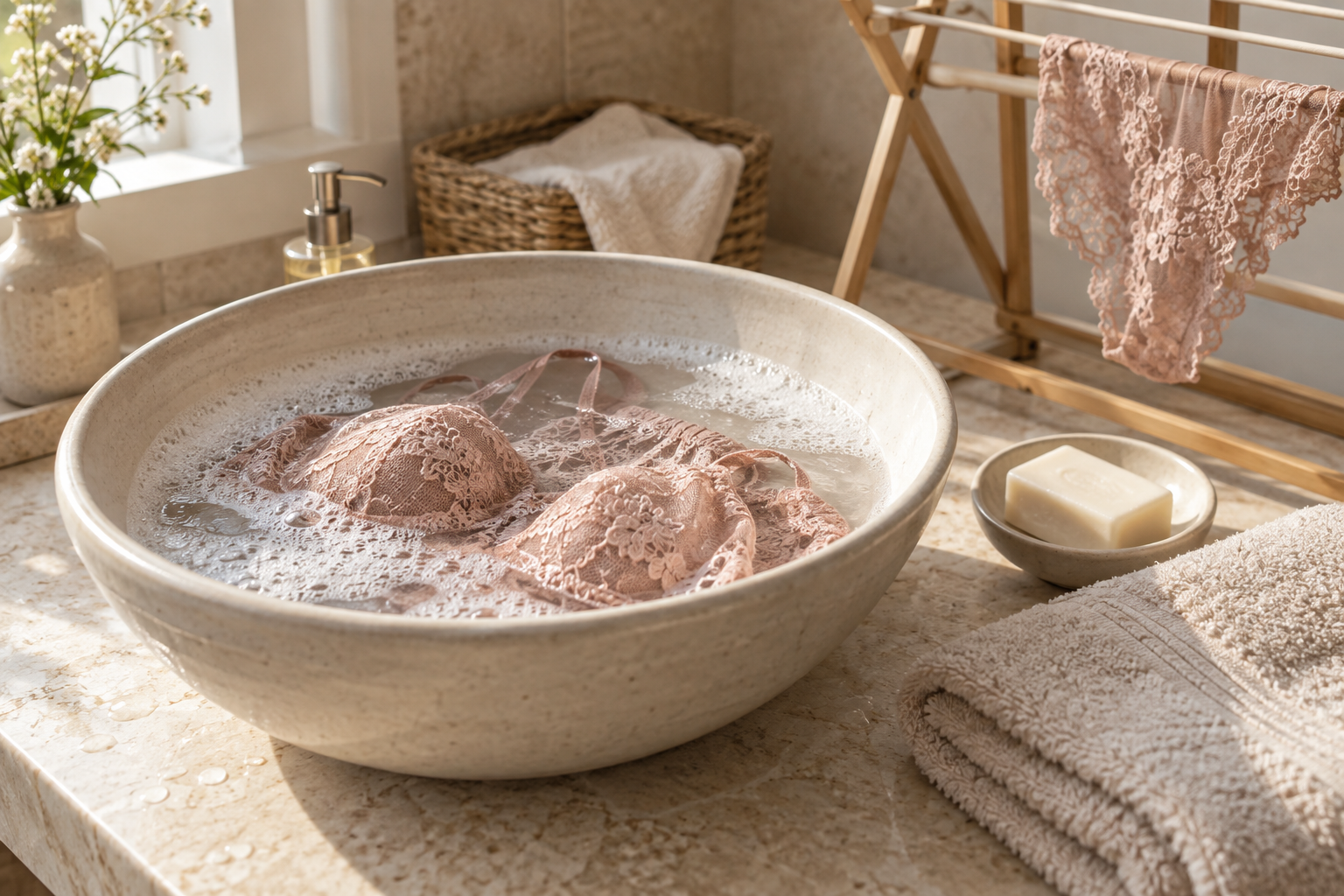
Both can snag on hooks, zips and rough surfaces. Fasten garments and use a lingerie bag when machine washing is allowed.
Microfibre
Microfibre describes very fine synthetic fibres, commonly polyester or polyamide. In lingerie it can create a smooth, light fabric that works well for seamless briefs, moulded cups and quick-drying pieces. Some microfibres feel silky, while others are brushed or matte.
Elastane, Lycra and stretch
Elastane is the generic European name for a highly elastic synthetic fibre. Spandex is the common US name, while LYCRA is a brand name. Small percentages can give bands, straps and stretch lace their recovery. Heat and harsh treatment can weaken stretch performance, which is why cool care and air drying are usually safest.
How to read a lingerie composition label
Fibre percentages are listed by weight, usually in descending order. A bra may contain several components with different jobs, so the outer cup, lining and wings may not feel alike. If a product description says lace or satin, look further for the actual fibre percentages.
| If you value | Look for |
|---|---|
| Soft everyday absorbency | Cotton blends |
| Fluid softness | Modal or lyocell blends |
| Light, smooth performance | Fine polyamide or polyester microfibre |
| Adaptive cup edges | Stretch lace |
| Firm shaping | Rigid lace, stable tricot or power mesh |
| Natural lustre | Silk, with care requirements checked |
No fibre is automatically luxurious, breathable or sustainable in every form. Quality, construction, dyeing, finishing, durability and care all shape the final result.
Frequently asked questions
Is satin always silk?
No. Satin is a weave and can be made from silk, polyester or other fibres. Check the composition label.
What is the softest lingerie fabric?
Softness is subjective and affected by fibre, yarn, construction and finishing. Cotton, modal, fine microfibre and silk can all feel soft in different ways.
What fabric is best for sensitive skin?
There is no universal answer. Seams, trims, dyes and detergent can matter as much as fibre. Choose smooth constructions, follow care instructions and seek clinical advice for persistent irritation.
Use our washing and care guide to protect the fabrics you choose, then browse the lingerie edit.
Sources and further reading: Cotton Incorporated textile fibre reference, TENCEL fibre information, The LYCRA Company fibre guide, and European Commission textile labelling guidance.