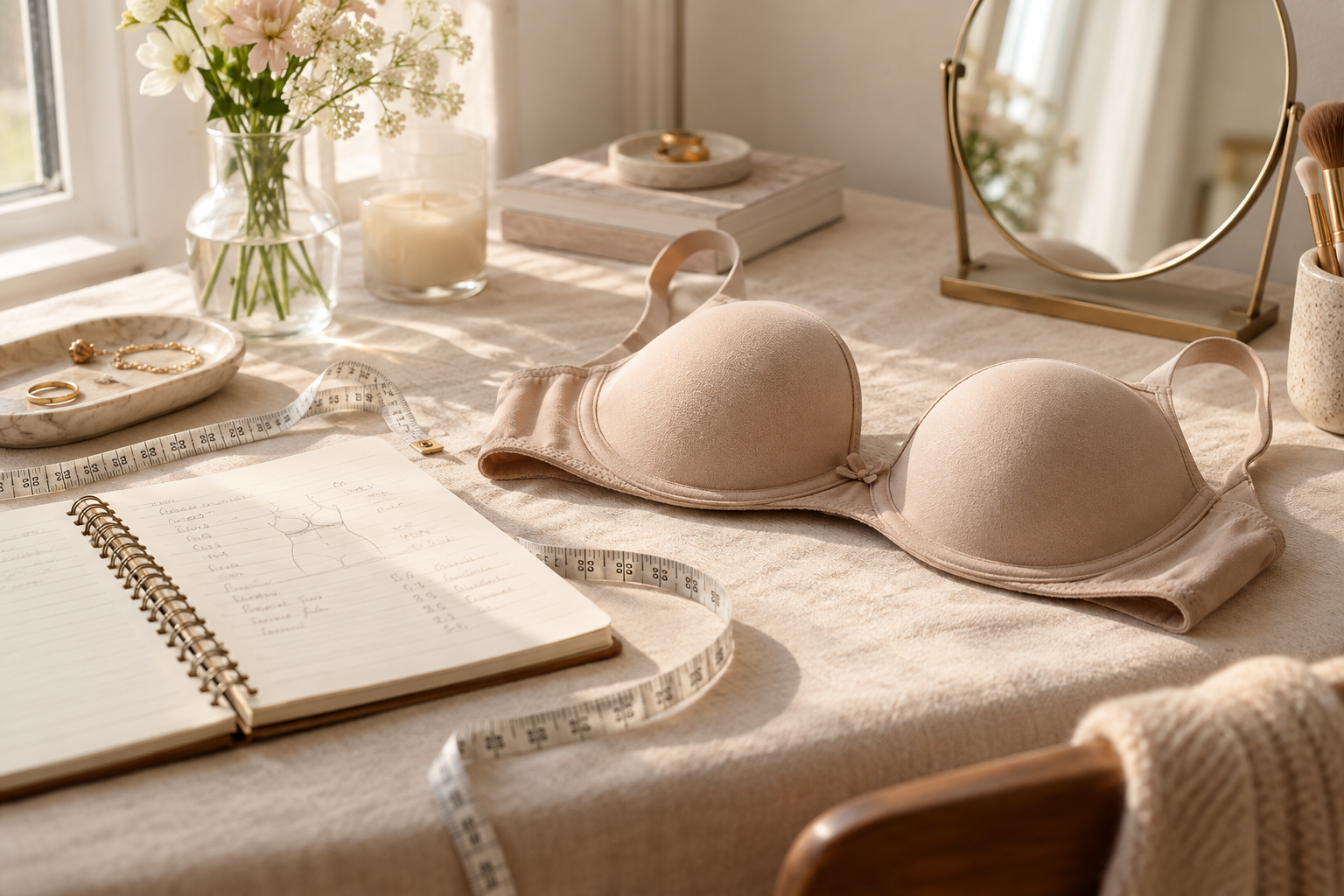
To measure your bra size at home, take a snug underbust measurement for the band and a relaxed measurement around the fullest part of your bust. Use the brand’s chart to turn those numbers into a starting size, then confirm it by trying the bra on. A tape measure can guide you, but the bra’s behaviour gives the final answer.
What you need
- A soft measuring tape
- A mirror
- A non-padded bra that does not compress your bust, or no bra if that is more comfortable
- The size chart for the brand you plan to buy
Stand naturally and keep the tape parallel to the floor. It should make contact with your body without cutting in. Ask someone you trust to help if keeping the tape level is difficult.
Step 1: measure your underbust
Wrap the tape directly beneath your breast tissue, around the place where the bra band will sit. Breathe normally, then take a snug measurement in centimetres or inches. Do not pull the tape to the point of discomfort.
Band calculations differ between brands. Some size charts map the raw underbust measurement directly to a band, while older methods add inches. Use the specific chart supplied by the brand rather than applying one rule to every bra.
Step 2: measure the fullest part of your bust
Move the tape around the fullest point of your bust, usually across the nipples. Keep it level and relaxed. The tape should not flatten your breast tissue. If your breasts are softer or pendulous, you can also measure while leaning forward and compare the result with the standing measurement.
Step 3: find your starting cup size
Most charts estimate cup size from the difference between the bust and underbust measurements. The greater the difference, the further the cup progresses through that brand’s sizing sequence. UK, EU and US cup letters do not progress in exactly the same way, so a universal subtraction table can be misleading. Enter your measurements into the chosen brand’s calculator or read its chart carefully.
If your measurements suggest more than one option, take both into the fitting room or order both when the returns policy allows. Breast shape, cup depth and fabric stretch all affect the result.
Step 4: check the bra, not just the number
Put the bra on its loosest comfortable hook. Settle your breast tissue fully into each cup, then check:
- The band sits level and feels firm without restricting your breathing.
- The cups contain your breast tissue with no spilling or empty fabric.
- The centre bridge lies comfortably against the chest in most wired styles.
- Any wire follows the root of the breast and does not rest on breast tissue.
- The straps stay in place without carrying all the support.
If the band rides up, try a smaller band. To retain a similar cup volume, move up a cup letter at the same time. For example, a UK 36D and 34DD are commonly treated as sister sizes. Because sizing systems vary, check the sequence used by that brand.
When to measure again
Measure again when your bras stop feeling supportive or after a noticeable body change. Pregnancy, breastfeeding, hormonal changes, menopause and weight changes can all affect breast size or shape. A regular fit check is more useful than measuring according to a rigid calendar.
If you notice a new or unusual breast or chest change, seek medical advice rather than assuming it is a sizing issue. The NHS recommends knowing what is normal for you and getting changes that are not normal for you checked.
Your calculated size is a fitting-room address, not a verdict. Start there, then move according to what the band and cups are doing.
Frequently asked questions
Should I measure with a bra on?
A thin, unpadded bra can help hold breast tissue in a natural position. Avoid padded, minimising or compressive styles because they can alter the bust measurement.
Why does the same size fit differently between brands?
Patterns, materials and sizing conventions vary. Even two styles from one brand can fit differently because their cup depth, wire width and coverage are not the same.
What matters more, measurements or fit?
Measurements narrow the search. Comfort, containment and support decide whether the bra actually fits.
Next, use our visual guide to how a bra should fit or explore bra styles across Underiva.
Sources and further reading: Frimley Health NHS Foundation Trust bra measurement guidance, NHS breast and chest awareness guidance, and Bravissimo fitting guidance.